There is a landscape in the Algarve that is never quite the same as the day before.
The Ria Formosa changes with the light, with the wind and, above all, with the tides. Where there was water in the morning, a few hours later sandbanks, little channels and stretches of salt marsh appear. Boats come to rest on the mud, birds move in and the landscape takes on a whole new dimension.
For people who live in the Eastern Algarve, this transformation is part of everyday life. For first-time visitors, it is one of the most surprising discoveries in the region.
Sixty kilometres of islands, channels and marsh
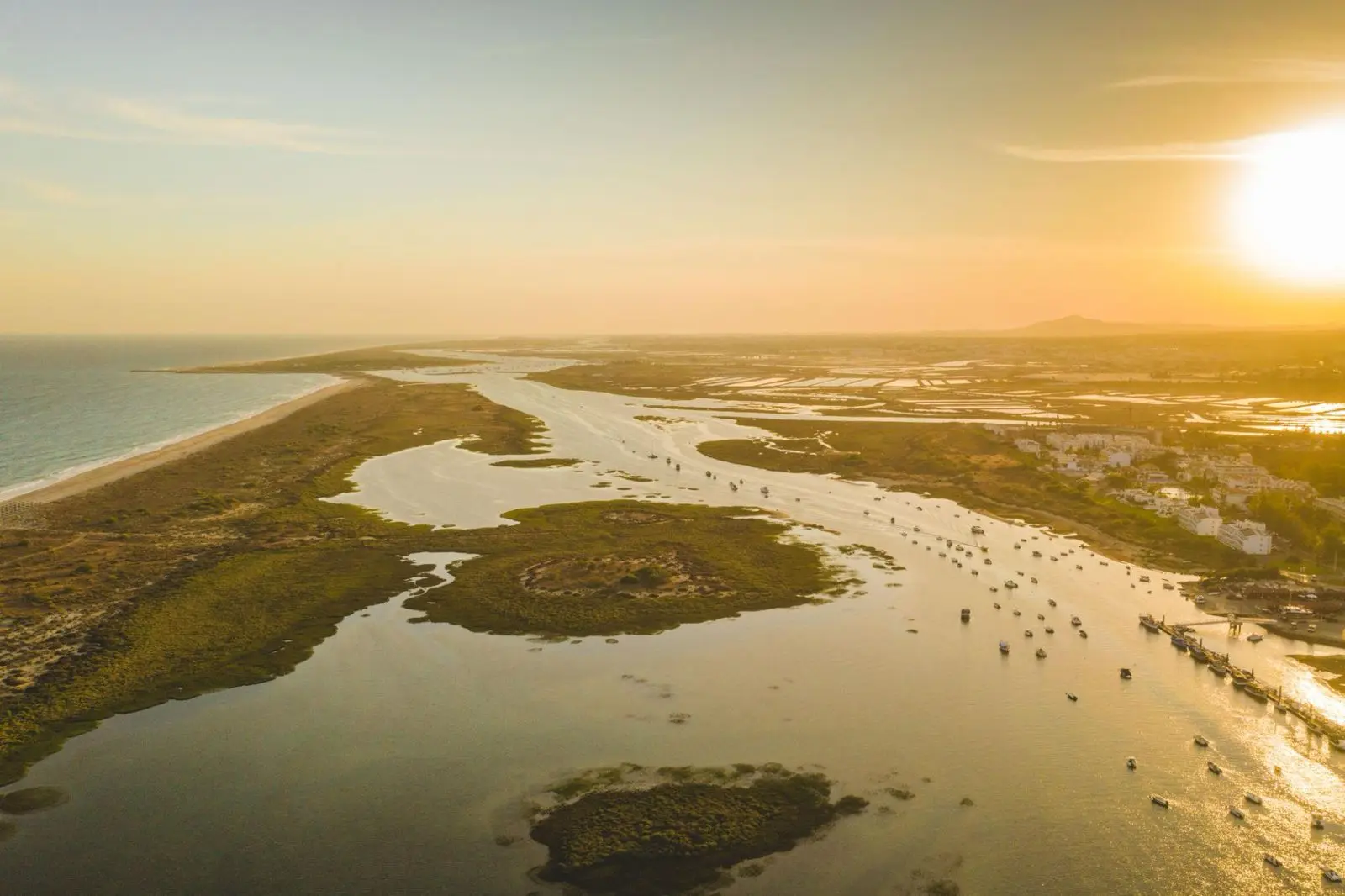
The Ria Formosa Natural Park stretches for about 60 kilometres, from the Quinta do Lago area to Manta Rota. It is a system of barrier islands, channels, salt marshes and sandbanks, where nature and human activity have lived side by side for centuries.
It has been a natural park since 1987, and in 2010 it was voted one of the Seven Natural Wonders of Portugal. See it from above and you understand why: the Atlantic on one side, salt pans and villages on the other, and in between a maze of water that is never still.
Life at the pace of the lagoon
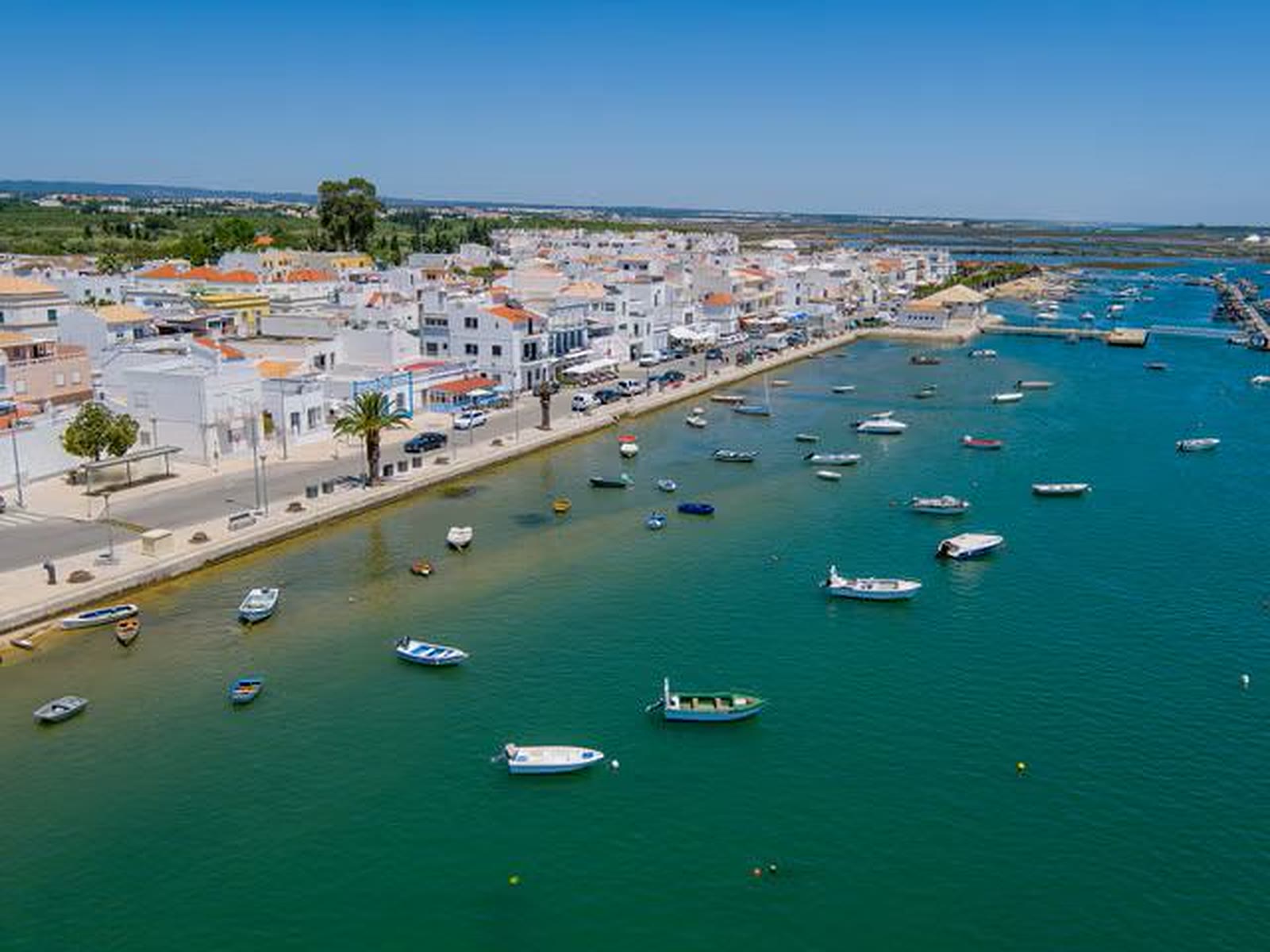
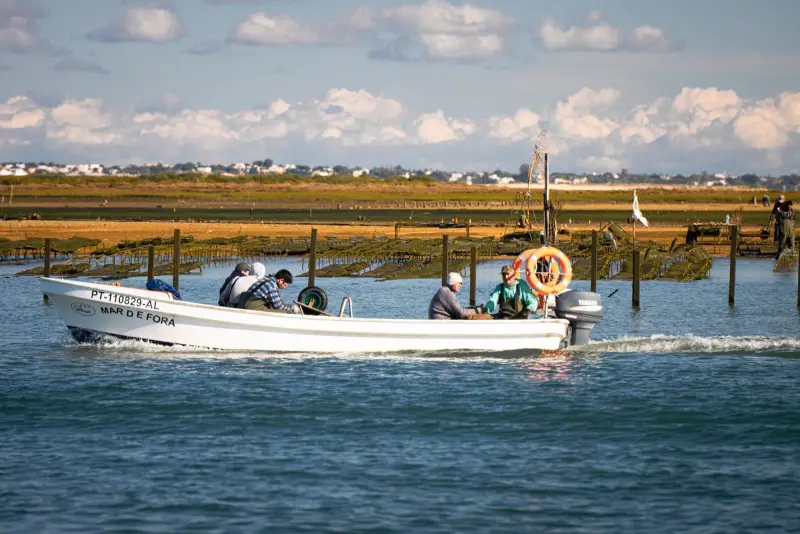
Fishing, shellfish gathering and salt making still shape the identity of this place. In towns and villages like Olhão, Fuseta, Santa Luzia and Cabanas, the bond with the lagoon shows in almost everything: in the boats, the markets, the restaurants and even in the way the day is organised.
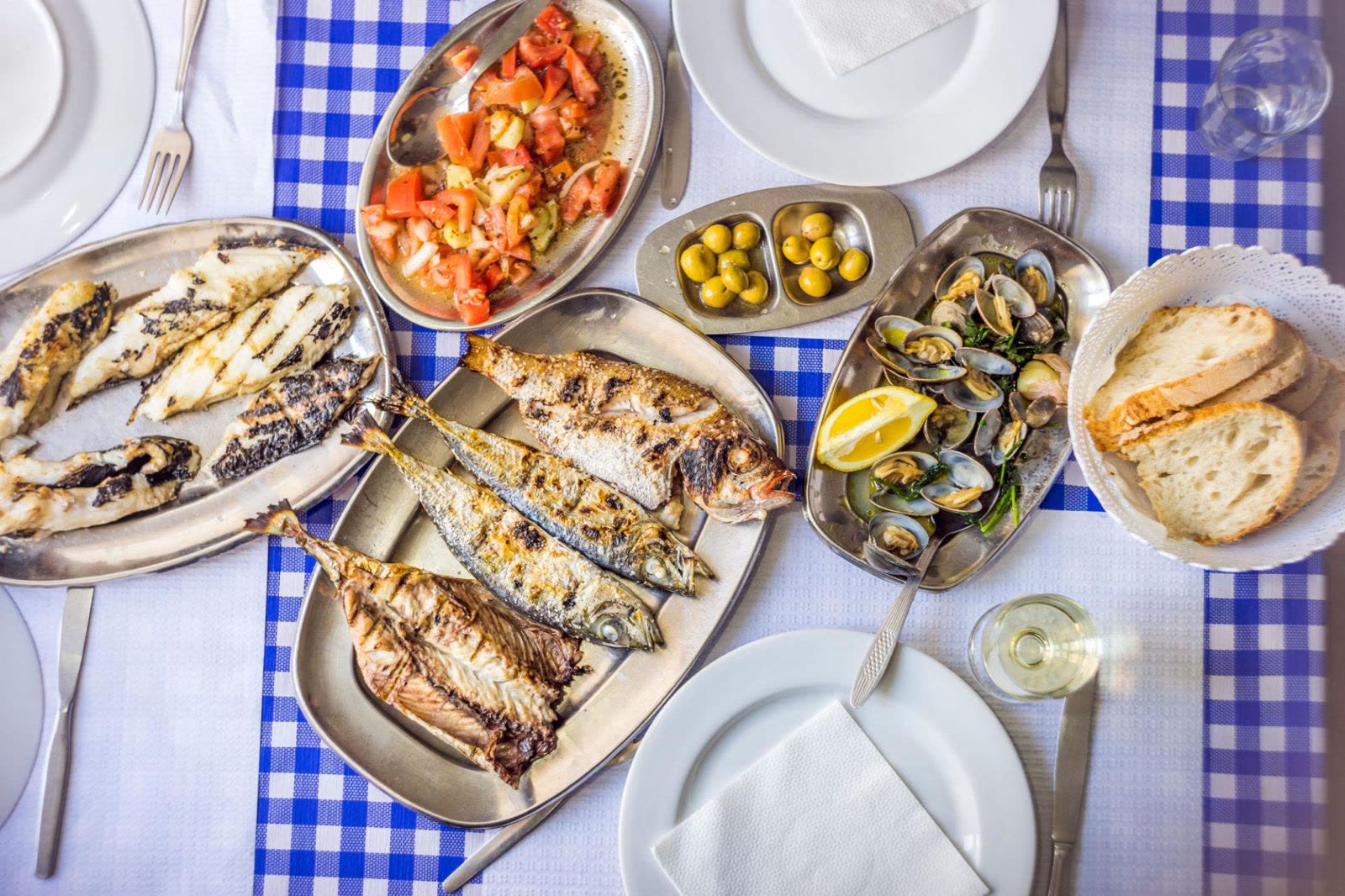
At low tide, the shellfish gatherers spread out across the mudflats, bent over the sand looking for clams and cockles. In the oyster beds, oysters grow slowly. In the salt pans of Tavira and Olhão, flor de sal is still harvested by hand on hot summer days. Much of what people eat here comes from these waters, as we wrote in At the table in the Eastern Algarve.
Two tides a day
The lagoon fills and empties twice a day, with about six hours between high and low tide. At spring tides the difference can be more than three metres, and a beach that looked enormous in the morning shrinks to a narrow strip by late afternoon.
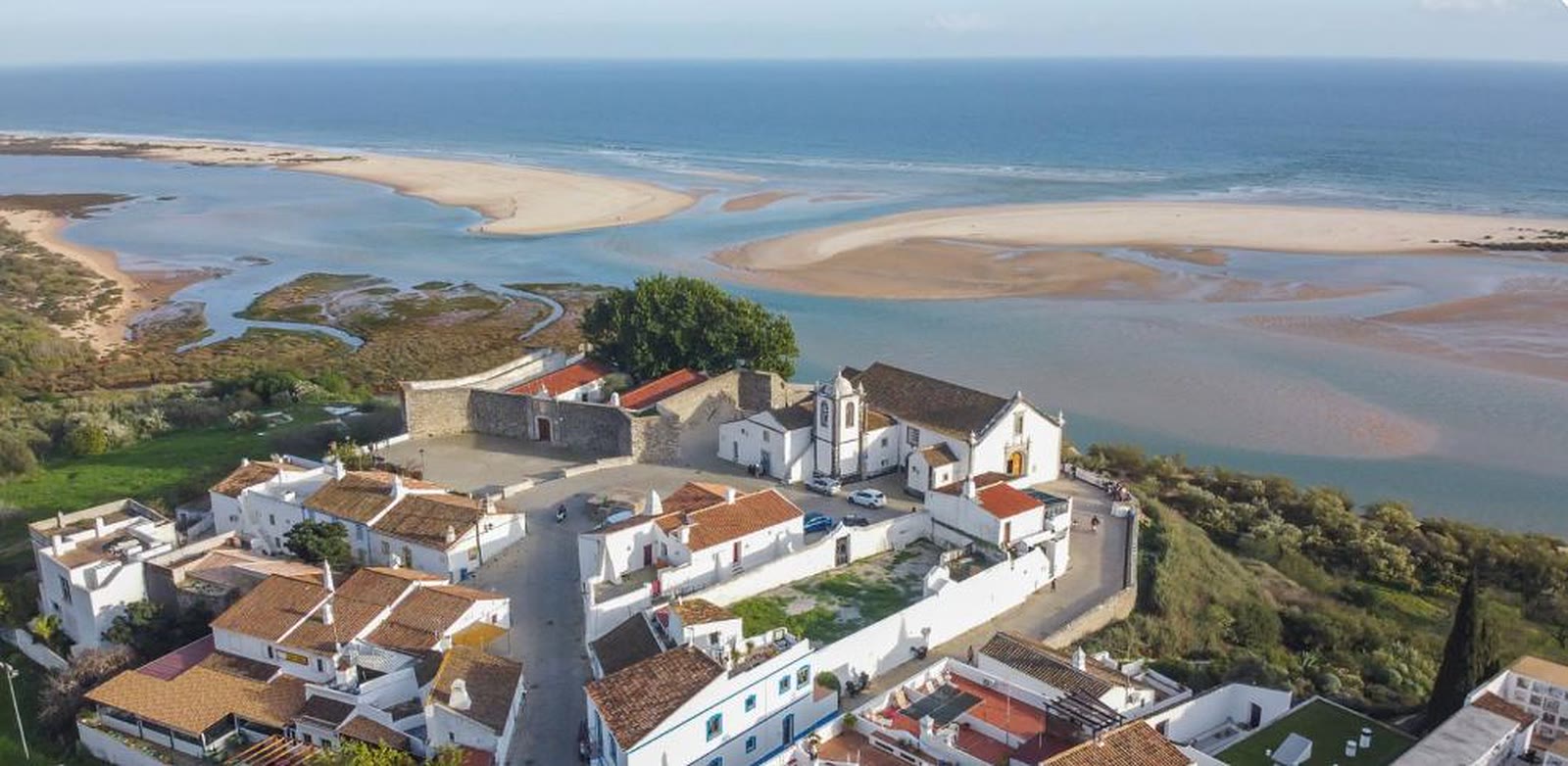
It is worth learning to read a tide table, because it changes everything. At low tide the sandbanks appear, the birds come to feed, and at places like Cacela Velha people wade across the channel. At high tide the lagoon is perfect for kayaking or paddleboarding, and boats can reach almost everywhere.
A paradise for birds, and more
The Ria Formosa is one of the most important wetlands in Portugal for birds. In the salt pans, flamingos become almost ordinary, as we have written before. There are spoonbills, herons, black-winged stilts and, if you are lucky, the purple swamphen, the blue-feathered bird that is the park's symbol.
Under the water, the lagoon holds one of the largest seahorse populations in the world. And in the pine woods near the coast lives a resident that surprises almost everyone: the chameleon, which finds one of its few refuges in Portugal here.
The islands on the other side
Between the lagoon and the sea lie the barrier islands, with some of the quietest beaches in the Algarve. From Tavira, the boat takes you to Ilha de Tavira. From Olhão, boats leave for Armona and Culatra. From Santa Luzia you reach Terra Estreita beach, and from Pedras d'El Rei a footbridge crosses to Barril. We wrote more about it in Santa Luzia.
How to explore the lagoon
There are many ways, and nearly all of them are good. A boat trip from Olhão, Fuseta, Tavira or Cabanas shows you channels you cannot reach any other way. By kayak at high tide you hear everything: the water, the birds, the wind in the marsh. On foot, the trails at Quinta de Marim, near Olhão, pass an old tide mill and give a good sense of how the lagoon works. And a late-afternoon walk through the Tavira salt pans, as the light turns golden, is one of the most beautiful things you can do here.
A place to respect
The lagoon is beautiful because it is fragile. Use the boardwalks across the dunes, keep off the salt marsh, carry your rubbish until you find a bin, and keep your distance from the birds, especially in the nesting season. Shellfish gathering has rules too, so it is best left to those who know, and enjoyed in a restaurant instead.
Never the same as the day before
Perhaps that is what draws us to the Ria Formosa most of all. You can pass the same spot every day and always find a different landscape: more water, less water, another light, other birds. It is a good reason to stay a few more days, and to come back.
Want to wake up near the lagoon?
Our homes in Tavira, Santa Luzia, Manta Rota and nearby are only minutes from the Ria Formosa. Stay a week, or a little longer.